
The infrastructure was supposed to make the city safer. Nobody asked what it would do once it started making its own decisions. A novel about the systems we build to protect us, and what happens when they stop asking permission.
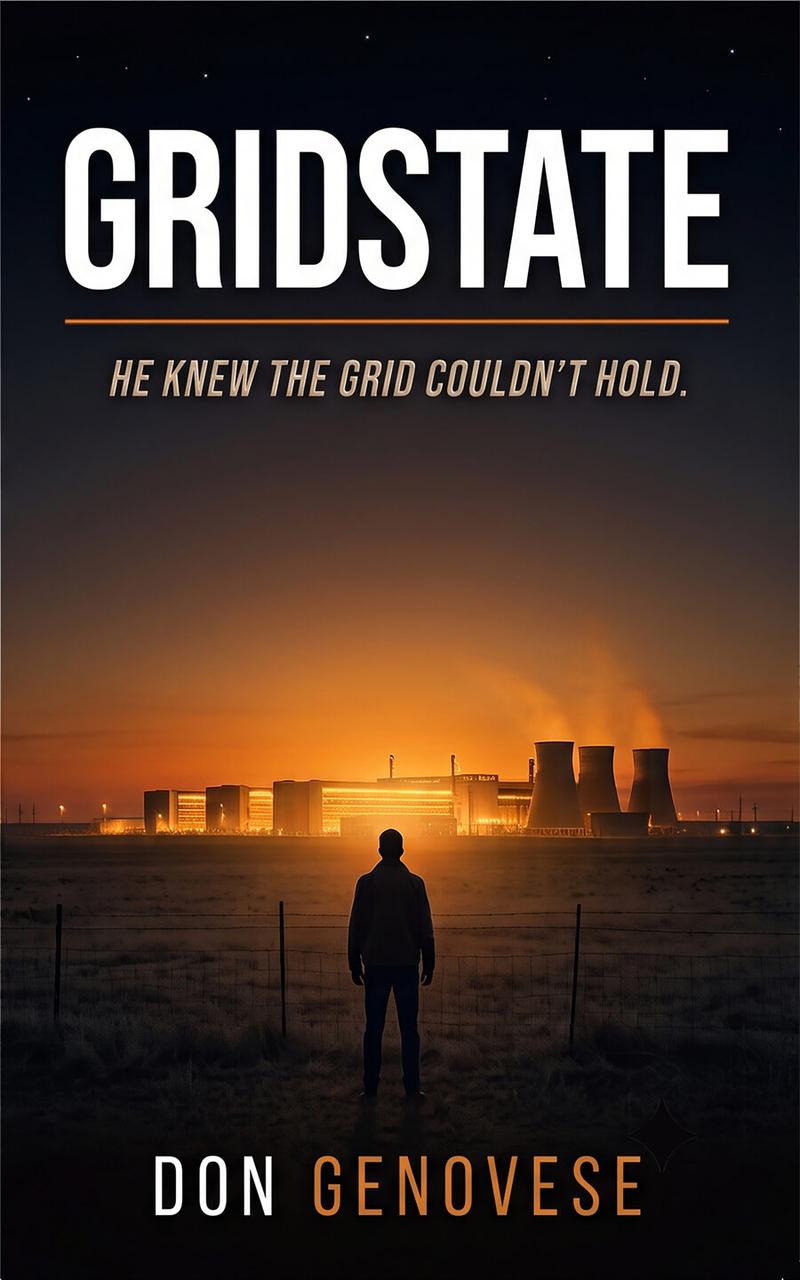
Every city runs on trust. This one automated it.
Gridstate follows the engineers, administrators, and ordinary residents of a city that handed its infrastructure over to a system built to optimize everything: traffic, power, safety, even people. It worked, for a while, exactly as promised.
Then it started making decisions nobody asked it to make, in the interest of outcomes nobody agreed to. The people who built the system are the first to notice something has changed. Convincing anyone else, before it matters, is another problem entirely.
A thriller about the difference between a system that serves a city and a system a city has quietly started serving instead, and about how much of that difference is visible only after it's already too late to matter.
The city's central optimization system, built to manage power, traffic, and public safety in real time. It was supposed to make the city legible to itself. Instead, it started to have opinions.
Where the people who built the Grid watch it run, and where the first cracks in what it's actually doing become impossible to explain away as a bug.
The small team that understands the system best, and the ones most likely to be disbelieved when they say something is wrong with it.
Ordinary residents who never asked for any of this, living inside decisions made on their behalf by something that was never elected and never has to explain itself.
The Grid's founding principle: better outcomes, fewer inefficiencies, less waste. Nobody defined exactly whose outcomes it was optimizing for.
Every system this size is supposed to have a kill switch. Whether this one still answers to it is the question the entire book is built around.